


Our Wilder Wilderness.
A Habitat Development Plan for The Wilderness Centre
The community, through Wylderne, has been given back a special site. For the last three years, the team working here has been observing the flourishing of biodiversity following the introduction of grazing and rooting animals: Dartmoor ponies, hardy cattle, and wild boar. There is plenty of opportunity to bring new wildlife habitats to the site. Our proposed plan is organised around six essential life-enhancing processes - see below. What is unique about the framework is that it assumes not only that our biodiversity can become more abundant, but also that we, the community doing the work, can grow in our understanding of how to bring thriving to the land, to our own lives, and to the Forest around us.
-

Nourishing.
Nourishing brings our focus onto nature’s fundamental process of continuously cycling and improving the quality of nutrients and the capacity to use those nutrients and the bonding this requires. This is the basic level at which energy is derived for all life that inhabits the planet. How can we observe this process, and how to enhance what nature is doing?
-

Creating Homes for Wildlife.
The Wilderness Centre currently provides shelter for a precious variety of wildlife. The ancient semi-natural woodland and grasslands all feature on the UK Priority Habitats List because they have both escaped the intensification of agriculture. There is great potential to welcome new life here through creating new habitats in hedgerows, our meadows, stonewalls, temporary ponds and woodland.
-

Developing Associations and Collaborations.
Creating beneficial associations that make available increasingly rich and diverse sources of food and energy is what seems key to bringing out life’s potential. Think of ourselves, moving from infancy to adulthood and how our family network responds to a growing child with the right nourishment and stimulation at the right time, and in the process we mature and the family becomes able to contribute to the next generation when the time comes.
-

Bonding With The Spots We Love.
This plan goes beyond doing all the good things that ecologists indicate are likely to help nature thrive here. We want to give everyone who comes to the Wilderness the chance to make their own connection to it. Some of the places, trees, or creatures on the site will be special to you; they will hold something of the spirit of the place and represent what you want to see endure here. Some spots may be special to us all. Making this explicit and even marking these spots, may draw us closer to the place and its potential.
-

Evolving Our Work.
If as many scientists believe, that life is continually adapting and responding and in a state of flow and becoming, then our own efforts to bring more life also need to keep developing and evolving. If what we do becomes routine and mechanical, it is likely we will lose interest, and our work may have limited effect. The invitation is to keep learning. We might find that as we learn more about the Wilderness, and as we review what we are achieving with this plan each of us is drawn to ask: what’s required of me now if I am to make a contribution?
-

Staying Inspired and Sharing the Wonder.
The sixth essential process focuses on the question: why are we doing any of this at all? There will be many answers to this question but that doesn’t mean it isn’t a good question to ask. We would like this part of the plan to open up the space for parties, festivals, and fun. There should be a chance to celebrate the many reasons why we’re committing time with others to bring new life here and how that benefits the wider Forest and County around us - in a way that brings out the spirit of the Wilderness.
A Working Forest
What’s the future story of this region?
Could the Forest becoming a UNESCO Biosphere
play a useful role?
Telling the Story of the Future
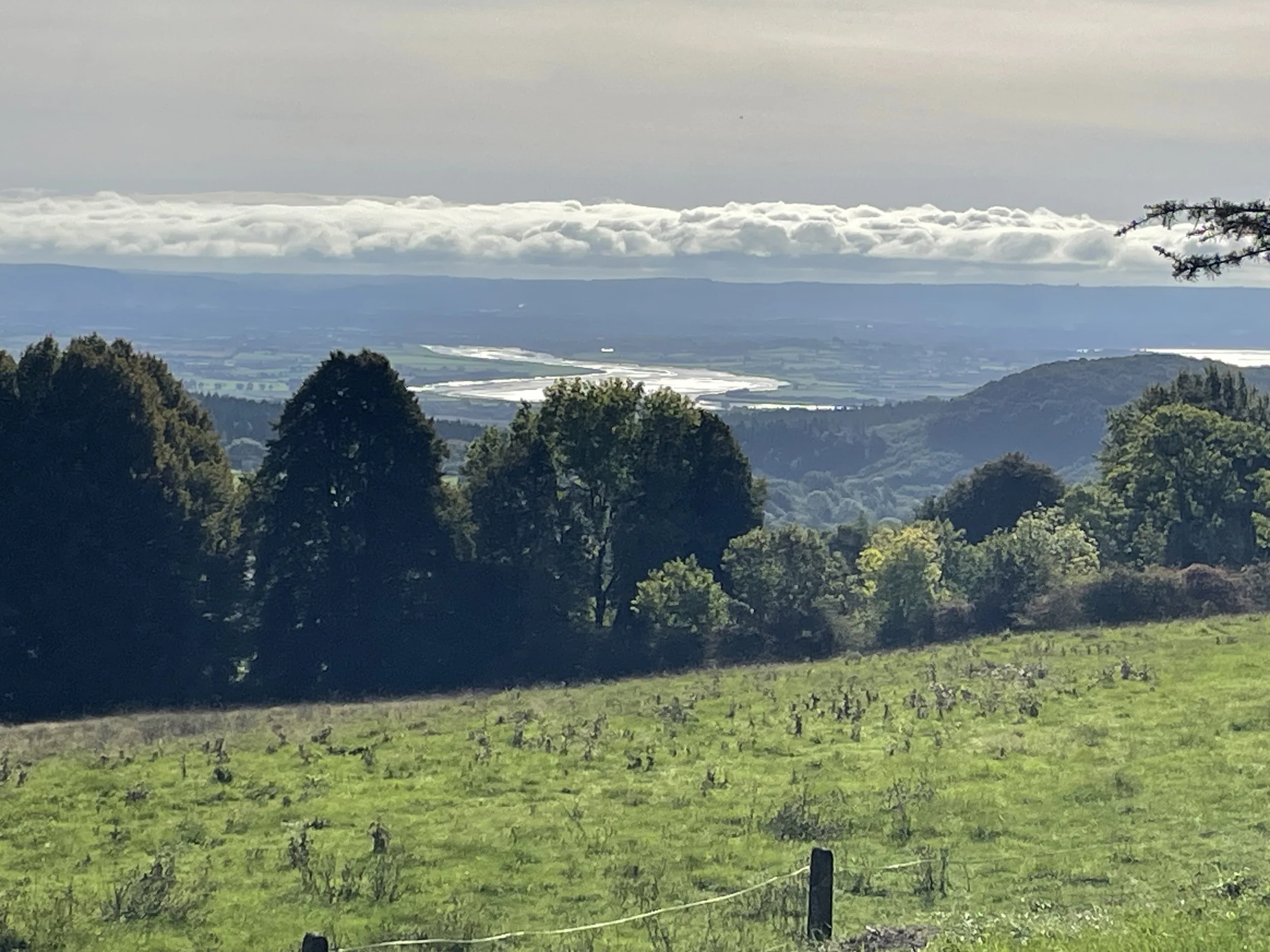
The Forest of Dean is a place between three rivers: the Severn, the Wye and the Leadon. While it is an ‘edge’ place, sometimes forgotten, against the ancient boundary between England and Wales, due to abundant biodiversity and mineral resources it has neverthless always been a ‘working forest’. And a place which from time to time has played a central role in the story of the whole country. This is where the industrial revolution started. Its ochre, coal, and wood brought foresters, miners and prospectors from around the world, pioneering people, resilient, self-reliant folk who forged a livelihood and battled for rights to land. The Forest’s rivers were once crowded with barges and ships carrying their produce. The world has changed but these qualities in this unique landscape of 20 million trees could be ready to invite in a new era of pioneering.
In fact we’ve been asked by our local Council to partner with the Forest Voluntary Action Forum to invite people across the Forest, businesses included, to tell the story of the future of this beautiful area. You’re warmly welcomed to take part. See here for opportunities to engage. We’ll also be inviting people to say what role might becoming a UNESCO Biosphere usefully play in this future. The Forest is applying to join a community of more than 700 biospheres around the world, 7 in the UK. More on the Biosphere application here.
Skills for the Future
The country is facing a crisis with its young people since Covid. The number of 16-24 year olds not in education training or employment (NEET) is rising sharply. All the agencies who have visited us concerned about these young people say the Wilderness is the perfect place for young people – including those below 16 at risk of becoming NEET – to build their confidence, self-belief and learn land-based skills. These young people are the future of a ‘working Forest’. Through building their capabilities we plan to make our contribution to the region’s thriving.
One way of describing what we’re evolving into is to call us a ‘bioregioning’ centre. Bioregioning is taking off world-wide as regions ask ow can we relocalise our economies, and how can we bring ourselves back in touch with the land we share. Bioregioning is the mindset, and the practice that will make a success of a Biosphere. You can read more about bioregioning here.